Company formation in France: setting up a subsidiary or branch
Foreign companies and entrepreneurs can set up a French company, a subsidiary or a branch, often without travelling to France. Laforgue Law Office drafts the articles, handles registration and reports to you in English.
- Structures: SAS, SARL, subsidiary, branch or liaison office.
- Registration: one-stop online portal run by INPI, then Kbis extract.
- Official costs 2026: €33.83 registry fee and a €199 (excl. VAT) legal notice for an SAS.
How company formation in France works
A French company comes into existence when its articles of association are signed. It becomes a legal entity once registered with the Trade and Companies Register (RCS).
Since 1 January 2023, all filings go through a single online one-stop portal run by INPI. The court registry checks the file and issues the Kbis extract, the company’s official proof of existence.
In between, the founders deposit the share capital, publish a legal notice and declare the beneficial owners.
Choosing a legal form
The choice depends on the number of shareholders, the flexibility needed and the social security status of the director:
- SAS or SASU: the articles freely organise management and decision-making. Share capital is set freely. A president is required and may be an individual or a company. It is the usual vehicle for foreign groups.
- SARL or EURL: a structure governed more closely by law, with 1 to 100 shareholders. The manager must be an individual.
- SA: at least 2 shareholders, 7 if listed, and minimum capital of €37,000. It suits larger projects.
- Branch: no separate entity. The foreign company registers a French establishment and remains liable for it.
In an SAS, SARL or SA, shareholders’ liability is limited to their contributions. Corporate income tax is 25%, with a 15% rate on the first €42,500 of profit for eligible SMEs.
Subsidiary, branch or liaison office
A foreign company can establish a presence in France in three ways:
- Liaison office
limited to preparatory activities such as market research and promotion. It has no legal personality and cannot trade;
- Branch
an establishment of the foreign company, registered with the RCS and allowed to trade. It has no separate assets. The parent company is liable for its debts;
- Subsidiary
a French company, usually an SAS, owned by the foreign parent. It acts in its own name and ring-fences the French business.
For a branch, the registry asks for the parent’s articles and proof of its legal existence, translated into French. Depending on the country and the registry, an apostille or legalisation may be required. Our certification and apostille service handles these steps.
Acquiring a French company in a sensitive sector may require prior authorisation from the French Ministry of the Economy.
Capital, legal notice and registration
- Share capital: cash contributions are deposited with a bank, a notary or the Caisse des dépôts. In an SAS, at least half is paid up on formation, the rest within 5 years.
- Legal notice: published in an authorised journal at a fixed rate. In 2026, €199 excluding VAT for an SAS and €148 for an SARL in mainland France.
- Registration: the file is filed online. Registry fees are €33.83, plus €19.33 for the beneficial owners declaration.
- Beneficial owners: individuals holding more than 25% of the capital or voting rights, or controlling the company.
Foreign directors and shareholders
EU, EEA and Swiss nationals can set up and manage a French company without a residence permit.
A non-EU director managing the company from abroad needs no residence permit. Depending on nationality, a visa may be needed for trips to France.
A non-EU director who moves to France needs a residence permit that allows this activity.
Opening a French bank account can take time for foreign founders. The capital deposit depends on it.
How we work with you
- StructureWe compare a subsidiary, a branch and the legal forms against your plans.
- ArticlesWe draft the articles of association and shareholders’ agreement, in French with an English version.
- RegistrationWe file on the online portal and follow the process until the Kbis is issued.
- Ongoing supportWe handle annual approvals, share transfers and commercial disputes.
You do not need to travel to France. Documents are signed electronically and meetings take place by video call.
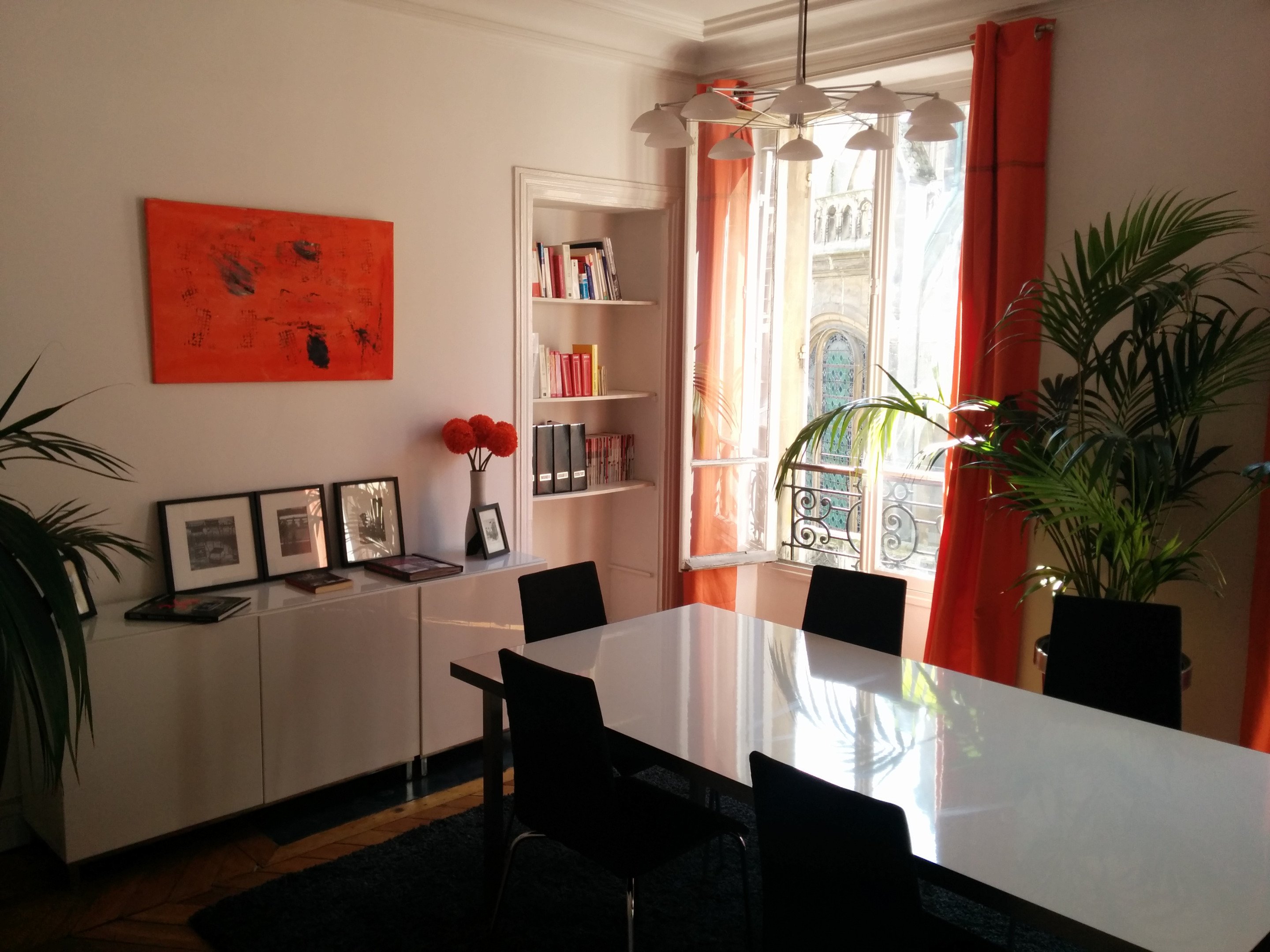
Who will handle your project
Your project is handled by François Laforgue and his team at 2 rue du Cygne, in central Paris. The firm is a member of the Paris Bar.
Its clients are mainly SMEs and foreign companies setting up in France. The Australian Embassy in France lists the firm among English-speaking lawyers.
What our clients say
Laforgue Law Office is rated 4.9 out of 5 on Google, from 61 reviews.
4.9/5 on Google, 61 reviewsSee all reviewsFrequently asked questions
Can a foreigner set up a company in France?
Yes. A foreign individual or company can own and manage a French company. A non-EU director who settles in France needs a residence permit that allows this activity; one managing from abroad does not.
How long does company formation in France take?
It depends mainly on two factors: opening the bank account for the capital deposit, and a complete registration file. Foreign documents to translate and apostille add time.
What is the minimum share capital for a French SAS?
There is no legal minimum: the articles set the capital freely, from €1. Banks and partners may expect a higher amount.
Subsidiary or branch: which one?
A subsidiary is a separate French company that limits the parent’s liability to its contribution. A branch is part of the foreign company, which is directly liable for its debts.
What are the official costs of forming a company in France?
In 2026, €33.83 in registry fees, €19.33 for the beneficial owners filing, and a legal notice at a fixed rate: €199 excluding VAT for an SAS in mainland France.
Do foreign documents need to be translated?
Yes. Documents of a foreign parent company are filed with a French translation. Depending on the country, an apostille or legalisation may also be required.
Set up your company in France with a Paris lawyer
Tell us in a few lines about your project, the shareholders and the planned activity. We reply in English with a recommended structure and a fixed-fee quote.
Send my request 4.9/5 on Google, 61 reviews. 2 rue du Cygne, 75001 Paris. +33 1 71 19 98 69